Transparency in Supplements: How to Read labels to make an informed decision?
Jul 11, 2025
Ever wondered what is really in that supplement bottle that is lying on the kitchen counter? You aren't alone. In such a time and age when wellness is a multi-billion dollar business, the typical consumer tends to be caught between glossy advertisements and thick and intertwined fine print.
The selection of a supplement should not be like a lottery. Be it a metabolic aide or comfort in the joint, the label is your initial line of defense. It is the guide to knowing what you are putting in your body. At Nutent Therapeutics, we are of the opinion that transparency is not some kind of corporate buzzword, but rather a pharmaceutical-grade requirement.
We have unplugged how to decipher these labels to the precision of a pharmacist. Read on to make sure your health adventure is not how far promises go.
Why is supplement transparency necessary for your Health and Safety?
So what is the danger with secretive or obscure ingredients?
The obscurement of the dosage of the active ingredients is caused when a label is suspect, such as when it is labelled as a proprietary blend. This poses two major threats: inefficacy and safety issues. The thing is that you are paying for a high-quality ingredient such as curcumin, and you get a trace of it that has no biological value. On the other hand, unknown additives or unmentioned fillers can cause an allergy or react to other drugs.
What is the difference between supplement labeling and pharmaceutical labeling?
In the pharmaceutical industry, all milligrams are counted and limited by the FDA, and the drug can come into the market. The supplements are regulated by the Dietary Supplement Health and Education Act of 1994 (DSHEA). This does not imply that the manufacturer is in charge of assuring safety and labeling accuracy before marketing, but it does not approve of them in terms of safety or efficacy prior to making them available to you. It is this regulatory gap that makes brand-initiative transparency the key factor.
What are the regulatory standards of supplements in the US?
Although the FDA does not pre-approve, they do have current Good Manufacturing Practices (cGMP). These rules oblige manufacturers to check their products by way of testing their identity, purity, strength, and composition. When Nutent product labels are GMP Certified, it is an indication that the facility has met such high clinical standards.
7 parts of a supplement label you should be able to read:
-
The "Supplement Facts" Panel: The Supplement Facts are specific to the dietary ingredients, unlike Nutrition Facts on food. This panel should indicate the name and the amount of each ingredient. Where an ingredient is included in a blend, the weight of the blend is presented, although the weight of individual components in the blend may be concealed. At Nutent, we make sure you are aware of what you are consuming.
-
Serving Size and Containers Per Container: This is where most of the consumer error occurs. A bottle may contain a message that it contains 1000mg of Turmeric, yet a closer examination of the size of a serving may make one know that he/she has to consume four capsules to receive the dosage. Always divide the price into cost-per-serving and not by the cost-per-bottle.
-
Amount Per Serving: The weight of the active ingredient is also provided in this section. Nevertheless, it does not necessarily specify the strength. Considering this, 500mg of raw guggul herb has an immeasurably different effect than 500mg of a guggul extract that is standardized at 2.5 guggulsterones.
-
Daily Value (DV) Percentages: She will be labeled, frequently, as DV not established. This is not a red flag, and it just states that there is no guideline on the daily intake that is recommended (as there is with Vitamin C). When it comes to these, you need to make use of the clinically established therapeutic dosages.
-
The "Other Ingredients" List: It is here that the fillers spend their time. This list is ranked based on weight, with the heaviest to the lightest at the bottom. Seek unadulterated labels that do not use artificial color, experience a huge quantity of binders, or troublesome flow agents such as talc.
-
Common Label Red Flags: Be careful of Proprietary Blends. Although this is said to guard the secret formula of the company, it is an easy way to guard their profit margins, as it enables them to engage in the practice of fairy dusting, that is, adding a small, insignificant portion of an expensive ingredient simply to make it appear on the label.
-
Third-Party Certifications of Testing: Check labels such as NSF, USP, or direct indications of third-party lab testing. These are signs that what is on the label is what is really in the bottle, as checked by a self-governing body.
How can you determine therapy dosages vs. TRACE AMOUNTS?
Which is the clinically effective dose?
A dose used in therapy is one shown to be effective through actual human studies. If science shows 100 milligrams of a substance supports metabolic function, yet a product holds just 10, benefits may not follow. Because what works in testing does not always appear on labels. So effectiveness depends on matching proven amounts.
Why are scientifically validated levels used in GlucodOX®?
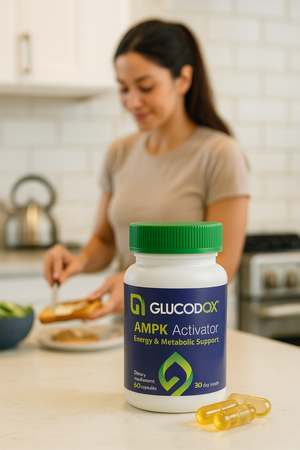
Glucodox® by Nutent is the formulation of an AMPK activator. A different approach shapes how metabolic pathways respond - instead of minimal amounts, a protected blend targets fat and sugar processing through precision-tested results. In real medical settings, synthetic stimulation boosts what naturally supports cell endurance: activation of (Adenosine Monophosphate-activated Protein Kinase) shifts energy regulation patterns.
What bioavailability considerations are to be considered?
The concentration of a substance that gets into your blood is called bioavailability. This is especially essential to Curcumin. When it comes to generic turmeric powder, it is notorious that the product can hardly be absorbed by the body.
Why is the curcumin of VOLT03® superior to generic powders?
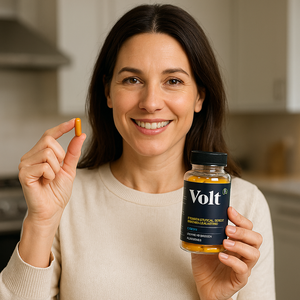
VOLT03® is formulated with a pharmaceutical-grade curcumin, which has also been statistically demonstrated to be vastly more bioavailable, up to 39 times more than typical curcumin. The words that indicate a product that is science-driven are when reading a label, words like patented delivery systems or enhanced absorption will be mentioned.
What are the other ingredients, and why are they important?
-
Are excipients always bad? Not necessarily. Excipients such as magnesium stearate or silica tend to be required so that the powder flows into the bottles evenly or in order to prevent clumping of the ingredients. A brand supported by science will, however, limit these to the minimum.
-
What is the reason why Nutent does not use proprietary blends? We feel you need to know what your supplements are made out of, precisely. Listing all the milligrams of our active ingredient makes us answerable to the consumer and the scientific community. The idea of trust in the nutraceutical space can only be long-term through transparency.
Are you going to believe such assertions as "ALL-NATURAL" or "PHARMACEUTICAL-GRADE"?
|
Criteria |
Nutent Therapeutics |
Generic "Bargain" Brands |
|
Active Ingredient Dosage |
Clinical-based (therapeutic levels) |
Fairy-dusted (Trace amounts) usually |
|
Transparency |
Full disclosure / No blends |
Proprietary blends (Hidden amounts) |
|
Testing |
3rd Party Lab-Tested |
Self-certified or Unknown |
|
Bioavailability |
Optimized (e.g., 39x Curcumin) |
Standard/Low absorption |
|
Sourcing |
Patented, pure extracts |
Powders sourced in bulk, which are generic |
Is "all-natural" regulated?
The FDA does not define the term natural with regard to supplements strictly. A product may be natural, yet it may be heavily metallized or may be processed using harsh chemicals.
So what is meant by pharmaceutical-grade?
Within the framework of Nutent Therapeutics, pharmaceutical-grade can be taken to mean our dedication to the clinical development process. When most supplement firms spend all their finances in marketing, we invest in scientific information. Our products are produced in cGMP plants, which are as clean and precise as pharmaceutical plants.
WHAT is the FDA Disclaimer on your Label?
The Food and Drug Administration did not test these statements. The product is not aimed at diagnosing, treating, curing, or preventing any disease.
Should this worry you? No. This is a compulsory legal claim on every dietary supplement. It indicates that it is a controlled condition product as a food product rather than a drug. Nevertheless, the fact that the FDA has not actually assessed the claim does not imply that the science is not there. The example of VOLT03® and Glucodox® is supported by published clinical studies and trials regarding their ingredients.
Are SIDE-Effects or drug interactions displayed on the CAN SUPPLEMENT LABELS?
Why are risks rarely listed?
The labels on supplements have a limited space as opposed to prescription drugs, which come with a package insert that contains all the known side effects. The risks are not frequently written unless required.
The safe way to take supplements:
-
Give it to a Professional: It is always better to talk to your doctor or your pharmacist, particularly when taking blood thinners or metabolic drugs.
-
Research Interactions: Compounds such as guggul or curcumin are strong biological agents. They are able to communicate with prescriptions.
THE BOTTOM LINER: WHAT are you trying to be? A Label-Literate Consumer?
Being a science-oriented customer requires one to leave the refrigeration area and venture into the Supplement Facts. To summarize:
-
Look at individual amounts: Beware of proprietary blends.
-
Check the dose: Check that it is in accordance with the clinical evidence.
-
Find bioavailability: Does your body have any use for it?
-
Markers of quality in demand: Seek GMP certification and third-party testing.
The philosophy of Nutent Therapeutics was that there had to be an openness between nature and science. We do not want you to believe us; we want you to read our labels and have a look at the data.
You are about to feel the difference that pharmaceutical-grade science will provide you with.
The Nutent Therapeutics Science-Backed Collection Explores Today.
Edited by Richard P. Becker Jr., R.Ph, MBA
Richard has over 25 years of experience in the pharmaceutical and nutraceutical industry (executive level) and is committed to the clinical rigor of natural wellness.
FAQs
1. Why is it important to read supplement labels?
Reading supplement labels helps you understand what you're consuming, avoid harmful ingredients, and ensure you're getting the right dosage for your needs.
2. What should I look for first on a supplement label?
Start with the Supplement Facts panel, which includes serving size, active ingredients, and their amounts per serving.
3. How can I identify hidden ingredients in supplements?
Check the “Other Ingredients” section for fillers, artificial colors, preservatives, and allergens that may not be obvious.
4. What does % Daily Value (%DV) mean?
%DV indicates how much a nutrient in a serving contributes to your daily recommended intake based on a standard diet.
5. Are natural supplements always safe?
No. “Natural” does not always mean safe. Some natural ingredients can interact with medications or cause side effects.