What are Third-Party Tested Supplements?
Jul 25, 2025
Do you know whether the supplements in your cabinet contain exactly what the label claims? This is a question many consumers rarely consider until reports emerge about inaccurate labeling or product contamination. The state of the contemporary wellness industry is a complicated one: on the one hand, the market is overloaded with promises of natural healing and miracle solutions, but on the other hand, the regulatory safety net may be even slimmer than the consumers would think.
The supplement industry in the United States is a multi-billion-dollar market, but it is not regulated in the same way as pharmaceutical medications. This regulatory gap makes third-party testing an important quality differentiator. It helps distinguish science-driven brands from those with limited quality controls, in which the focus of marketing budgets is put on the molecular purity, on the other hand.
Nutent Therapeutics emphasizes transparency as a core part of product quality and formulation standards. In this guide to the perplexing topic of third-party testing, this article explains what third-party testing involves and why it is the only means of assuring pharmaceutical-grade viability in a nutraceutical world, and how we impose these high standards on such products as GlucodOX® and VOLT03®.
Why is third-party testing important to dietary supplements?
The environment in which supplements are sold requires understanding the role of independent verification. In comparison to prescription drugs, which have gone through years of extensive clinical trials and FDA approvals before reaching the market, dietary supplements are under the Dietary Supplement Health and Education Act of 1994 (DSHEA).
The Regulatory Gap:
Under the DSHEA, supplements are not approved by the FDA as either safe or effective before being marketed. Instead, ensuring product safety falls entirely on the manufacturer. Regulatory action typically occurs after a product is already on the market, typically after issues arise, such as harmful effects or signs of contamination.
The Dangers of untested products:
Without independent verification, several risks may arise:
-
Contamination: The ingredients such as turmeric or guggul may be cultivated in soil which may have heavy metals (lead, arsenic, mercury) or may contain pesticide residues or environmental contaminants.
-
Adulteration: There are certain natural products that have been reported to contain some hidden pharmaceutical elements to enhance perceived effectiveness.
-
Mislabeling (Identity): When buying high-potency curcumin, the product may contain lower concentrations of active compounds than stated, with little to no active curcuminoid in it.
-
Potency decay: Organic compounds decay with time. The 500mg stated in the label may actually be 200mg by the time the product is consumed without a stability test.
Who Conducts Third-Party Testing for Supplements?
Third-party implies that the organization that conducts the analysis is not financially interested in the product being successful. They are standalone laboratories that provide independent verification of product quality. Common third-party testing organizations include:
|
Organization |
Specialization |
|---|---|
|
Verifies ingredients, potency, quantity, and digestion/absorption rates |
|
|
Verifies absence of 280+ substances (Certified for Sport) |
|
|
Independently buys and tests retail products to verify label claims |
|
|
Protects against drug contamination and verifies ingredient identity |
Nutent’s Commitment to Quality:
At Nutent Therapeutics, ingredient quality is verified rather than assumed. Products are third-party tested for identity, potency, and purity. We produce only in GMP-certified (Good Manufacturing Practices) factories to support consistent manufacturing quality and formulation integrity.
Learn why Nutent Therapeutics maintains quality with pharmaceutical-grade supplement standards: Our Science & Story.
What does Third-Party Testing actually test?
A test does not consist of a single glance in a microscope. It is a complex of advanced chemical and biological tests.
-
Identity Verification: Identity testing confirms that the ingredient matches its labeled source, such as Commiphora mukul for guggul extract. To check, scientists rely on methods like High-Performance Liquid Chromatography, which reveals the chemical signature unique to the substance. This ensures confidence in ingredient authenticity.
-
Potency and Dosage Accuracy: In case a study has demonstrated that 500mg of a certain curcuminoid is essential to support the joints, and you are taking a curcuminoid supplement that has 100mg of the active ingredient (as indicated by its label), the intended physiological effect may not be supported. The potency testing is done to ensure that the labeled dosage is really there.
-
Purity and Contaminated Screening: This is a critical step in quality assurance. Labs screen for:
-
Heavy Metals: Lead, Mercury, Cadmium, and Arsenic.
-
Microbial Contaminants: E. coli, Salmonella, yeast, and mold.
-
Pesticide Residue: This is of particular concern to botanical extracts.
-
Stability and Shelf-Life: Stability testing evaluates how the product performs under conditions such as heat and humidity. The stability testing is done to maintain the effectiveness of the supplement until the last day of its expiry date.
What is the difference between third-party testing and GMP certification?
-
GMP (Good Manufacturing Practices): These are rules that are implemented by the FDA, and they outline how supplements are produced, the tools, and the type of equipment employed, and in what manner they are controlled. GMP focuses on how products are manufactured. It ensures that the facility is clean, the employees are trained, and the processes are documented.
-
Third-Party Testing: It evaluates the finished product or raw materials and verifies their chemical composition.
A GMP-certified company may also manufacture low-quality ingredients into a product when they are not testing these inputs. Nutent Therapeutics applies both. We employ GMP facilities to make sure that the manufacturing process is excellent and third-party laboratory tests to make sure that the formula does not undermine scientific integrity. We take testing seriously, and it is infused in our two flagship products.
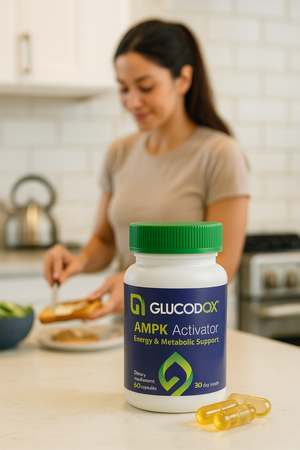
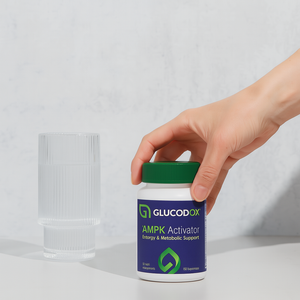
GLUCODOX®: Enhanced Metabolic Support
GlucodOX® contains standardized guggul extract, which has been studied in relation to metabolic pathways, including AMPK activity.
-
The Testing Edge: Guggul extracts typically have notorious poor standardization. Guggulsterones are the bioactive compounds we specifically test to support the metabolism of lipids (cholesterol) and glucose (blood sugar). The third-party testing helps ensure consistency in ingredient composition across batches.
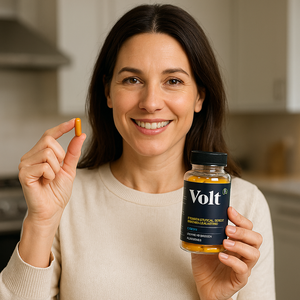
VOLT03®: Pharmaceutical-grade curcumin
As the market is being flooded with turmeric supplements, VOLT03® stands out with:
-
Bioavailability Evidence: Standard curcumin has very low bioavailability in the body. VOLT03® is formulated using a pharmaceutical-grade curcumin complexed with gamma cyclodextrin to support enhanced absorption in the bloodstream.
-
The Purity Promise: Since the ingredient is curcumin, which is a root extract, there is a high risk of heavy metal contamination. VOLT03® has been tested by a third party as pure and potent. Third-party testing helps verify purity and reduce the risk of contaminants.
Willing to change to science-supported, third-party tested supplements? Nutent offers free shipping in the U.S. for orders over $50.
What do you need to look out for before purchasing supplements?
As an informed customer, you are entitled to know what your body is consuming. The next time you are buying a new supplement, you should consider these four questions:
-
Where is it manufactured? Look for GMP-certified manufacturing facilities.
-
Is it third-party tested? Find logos, such as USP or NSF, to identify a promise of quality.
-
Are the dosages supported by research? Some brands add a small portion of an ingredient just to mention it on the label. On the other hand, some manufacturers formulate products using dosages aligned with existing research.
-
Is there a guarantee? The results will be supported by the company that supports its testing.
The Bottom Line - You deserve scientific data that drives results, not vague promises
Product quality and transparency are critical in the supplement industry. While many supplements are derived from natural sources, it is Science that makes sure that these materials are safe and effective.
The translation between a natural product and a pharmaceutical standard is the third-party testing. Third-party testing provides greater confidence in product quality.
Be in charge of your health and wellness today by using the supplements you can rely on.
Medical Disclaimer: These are not reviewed by the Food and Drug Administration. The products are not supposed to diagnose, treat, cure, or prevent any disease. Never initiate any new supplement program without first consulting a medical practitioner, regardless of whether you have underlying health problems or are currently on prescription drugs.
FAQs
1. What are third-party tested supplements?
Third-party tested supplements are products that have been independently tested by external laboratories to verify their ingredients, purity, and quality.
2. Why is third-party testing important for supplements?
It ensures the supplement contains the ingredients listed on the label and is free from harmful contaminants such as heavy metals or impurities.
3. Who performs third-party testing?
Independent organizations and certified laboratories conduct testing to verify the quality and safety of supplements.
4. How can I tell if a supplement is third-party tested?
Look for certification seals or statements on the label indicating independent testing or quality verification.
5. Are third-party tested supplements safer?
Yes, they are generally considered more reliable because they have undergone independent verification for quality and accuracy.
6. Do all supplements undergo third-party testing?
No, third-party testing is voluntary, so not all supplements are independently verified.