Is Curcumin the Same as Turmeric? Here’s the Difference
Jun 13, 2025
Turmeric and curcumin are terms that are often used interchangeably, which can be confusing. While they are related, they are not the same. Yes, that's true!
Turmeric is a root that has been used for thousands of years as a spice, natural colorant, and part of traditional medicine. Curcumin, on the other hand, is a specific compound found within turmeric that has attracted significant scientific attention for its potential health-supporting properties. Basically, understanding the difference between turmeric and curcumin can help you make informed choices about diet, supplements, and wellness.
In this article, we will get into the origins of turmeric, the role of curcumin in the body, how they differ from each other, their health benefits, and why curcumin supplementation may be more effective than turmeric alone. You will also read what makes Nutent Therapeutics’ VOLT03® formulation of curcumin unique. So, keep reading if this topic interests you.
What Is Turmeric and Where Does It Come From?
Turmeric is a bright yellow-orange spice that comes from the root of the plant Curcuma longa, which is part of the ginger family. It has been cultivated in Asia for thousands of years and is commonly used in cooking, traditional remedies, and as a natural dye. Turmeric has a warm, earthy flavor and a vibrant color that makes it popular in many dishes.
Beyond its culinary use, turmeric has a long history in traditional medicine systems such as Ayurveda, where it is valued for its ability to support overall wellness and vitality.
What Active Compounds Are Found in Turmeric?
Turmeric is not a single chemical, but a complex mixture of many compounds. It contains essential oils, fibers, starches, and a group of naturally occurring pigments called curcuminoids.
The three main curcuminoids are:
- curcumin
- demethoxycurcumin
- bis-demethoxycurcumin
Curcumin is the most prominent of these and is the compound that has been studied the most for its potential health-supporting properties.
How Has Turmeric Been Used in Ayurvedic and Traditional Medicine?
Turmeric has been used in traditional medicine for a variety of purposes.
- It has been applied to the skin to help with minor wounds and skin health.
- When taken orally, turmeric has been used to support digestion, joint comfort, and overall vitality.
These traditional uses are based on centuries of experience, and while modern research is exploring many of these applications, traditional use does not guarantee therapeutic effects.
What Is Curcumin and How Does It Work in the Body?
Curcumin is a natural compound found in turmeric. It is the bright yellow pigment that gives turmeric its distinctive color.
Scientists and health experts have studied curcumin for its potential to support the body’s normal inflammatory response, antioxidant defense, and cellular health. Curcumin is usually extracted and concentrated from turmeric to create supplements, which allows for higher doses than what could be obtained from using turmeric as a spice in cooking.
Is Curcumin a Separate Plant or a Compound in Turmeric?
Curcumin is not a separate plant. It is one of the chemical compounds naturally present in the turmeric root. When people refer to curcumin in supplements or research, they mean a purified form of this compound extracted from turmeric.
What Are the Main Functions of Curcumin in the Human Body?
Curcumin works by interacting with various pathways in the body. It may help support joint comfort, assist the body’s natural antioxidant defenses, and contribute to a healthy inflammatory response. It may also support metabolic and immune health in subtle ways. However, the effects are influenced by how much curcumin is absorbed and how it is formulated, which can vary significantly between products.
What Makes Curcumin’s Bioactivity Scientifically Significant?
Having enough curcumin in your blood (bioactivity) is considered significant and essential for health benefits because it has the ability to interact with multiple processes in the body. It can influence proteins, enzymes, and signaling pathways, which explains why it has attracted so much attention in research. Its broad activity makes it a valuable compound for wellness, but effective delivery into the body is crucial because curcumin is not easily absorbed on its own.
Turmeric vs Curcumin: What’s the Real Difference?
Turmeric and curcumin differ in several important ways. Turmeric is the whole root or its powdered form, containing a mixture of compounds including curcuminoids. Curcumin is the main curcuminoid extracted and concentrated from turmeric. While turmeric provides only a small amount of curcumin, concentrated curcumin supplements deliver a much higher and more consistent dose of the active compound.
Here is a simple comparison table showing their key differences:
|
Feature |
Turmeric |
Curcumin |
|
Origin |
Comes from the root of the Curcuma longa plant |
Extracted and concentrated from turmeric root |
|
Composition |
Contains oils, fibers, starches, and curcuminoids |
Primarily curcumin or standardized curcuminoid extract |
|
Typical use |
Culinary spice, whole-plant extracts, general wellness |
Supplements or specialized formulations for higher doses |
|
Curcumin content |
Low, usually a few percent of the total weight |
High, can be hundreds to thousands of milligrams per serving |
|
Absorption |
Moderate absorption as part of the whole root |
Poor absorption unless enhanced through special formulations |
What Are the Scientifically Proven Health Benefits of Curcumin?
Curcumin has been studied for its potential to support normal body functions. Many people take it to help support joint comfort, reduce occasional inflammation, and promote overall wellness. While curcumin shows promise in these areas, the effects depend on the amount consumed and how well it is absorbed by the body.
Here Are Some Major Health Benefits of Curcumin
- Curcumin may help support joint comfort and flexibility in daily movement.
- It may assist the body’s natural antioxidant defenses, helping protect cells from oxidative stress.
- Curcumin may support a healthy inflammatory response, contributing to overall wellness.
- It may help support brain function and mental clarity by supporting normal cellular and metabolic processes.
- Curcumin may contribute to heart health by supporting normal blood vessel and circulation functions.
Why Doesn’t Turmeric Alone Provide the Full Benefits?
Turmeric as a spice contains only a small amount of curcumin (3-9%), which means using it in food may not provide enough to achieve the health-supporting effects studied in supplements. Additionally, curcumin is not easily absorbed by the body, which further limits the potential benefits of turmeric alone.
How Much Curcumin Is in Typical Turmeric Powder?
Turmeric powder usually contains between two and nine percent curcumin by weight. This means that even generous use of turmeric in cooking will only provide a small amount of curcumin, far less than the doses typically used in concentrated supplements.
What Role Does Bioavailability Play?
Bioavailability refers to how much of a substance can be absorbed and used by the body. Curcumin is naturally poorly absorbed, quickly metabolized, and eliminated from the body. Special formulations or combinations with other compounds, such as fats or natural enhancers, can increase absorption. Without these enhancements, even higher amounts of curcumin may not provide noticeable effects.
What’s Special About Curcumin in Nutent Therapeutics’ VOLT03®
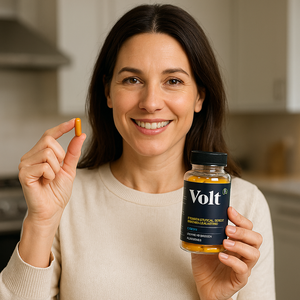
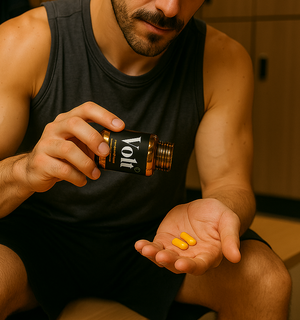
Nutent Therapeutics’ VOLT03® is a curcumin formulation designed to improve absorption and provide a consistent, higher dose of the active compound. Unlike standard curcumin supplements, VOLT03® uses a special delivery method that helps curcumin reach the bloodstream more effectively. This allows the body to use the compound more efficiently and supports the potential benefits that have been observed in studies with enhanced curcumin.
How Is It Different from Generic Curcumin Supplements?
VOLT03® is formulated to improve the natural limitations of curcumin, particularly its low absorption. While many curcumin supplements rely on plain extracts, VOLT03® is designed to enhance the way the body absorbs and uses curcumin. This makes it more effective at delivering consistent amounts of the active compound compared to standard curcumin powders or capsules.
Final Words
Overall, turmeric and curcumin are closely related but not the same. Turmeric is the whole root that contains a mixture of compounds, while curcumin is the main active compound extracted from it. Turmeric alone provides only small amounts of curcumin, which limits its potential benefits. Curcumin supplements, especially those with enhanced absorption, may provide more consistent support for joint comfort, antioxidant defense, and overall wellness. Understanding the difference between turmeric and curcumin helps you make informed choices about diet, supplements, and products like VOLT03®.
Always remember that natural compounds support wellness but are not a substitute for professional medical advice, and individual results may vary.
FAQs
1. Is curcumin the same as turmeric?
No. Turmeric is a root and spice, while curcumin is a bioactive compound found within turmeric that provides most of its anti-inflammatory and antioxidant benefits.
2. Which is better: curcumin or turmeric?
Curcumin is often more effective for targeted health benefits because it is more concentrated. Turmeric is beneficial as a whole food but contains much lower levels of curcumin.
3. Why do curcumin supplements include black pepper?
Black pepper contains piperine, which significantly improves curcumin absorption and bioavailability in the body.
4. Can I get enough curcumin from turmeric alone?
It’s difficult to reach therapeutic curcumin levels from turmeric spice alone, which is why supplements are often used for specific health purposes.
5. What are the health benefits of curcumin?
Curcumin supports inflammation reduction, antioxidant defense, joint health, digestion, and immune function.
6. Is turmeric still healthy without curcumin supplements?
Yes. Turmeric offers general wellness benefits and is a nutritious spice, even though its curcumin content is lower.
7. Are curcumin supplements safe for daily use?
For most adults, curcumin supplements are safe when taken at recommended doses. Always consult a healthcare professional if you take medications or have health conditions.